Blog·19 November 2026·5 min read
JRBT Group-C: 414 posts, and what a personality test actually is
Interviews begin on 15 December. Most candidates have never sat one, and prepare for the wrong thing entirely.
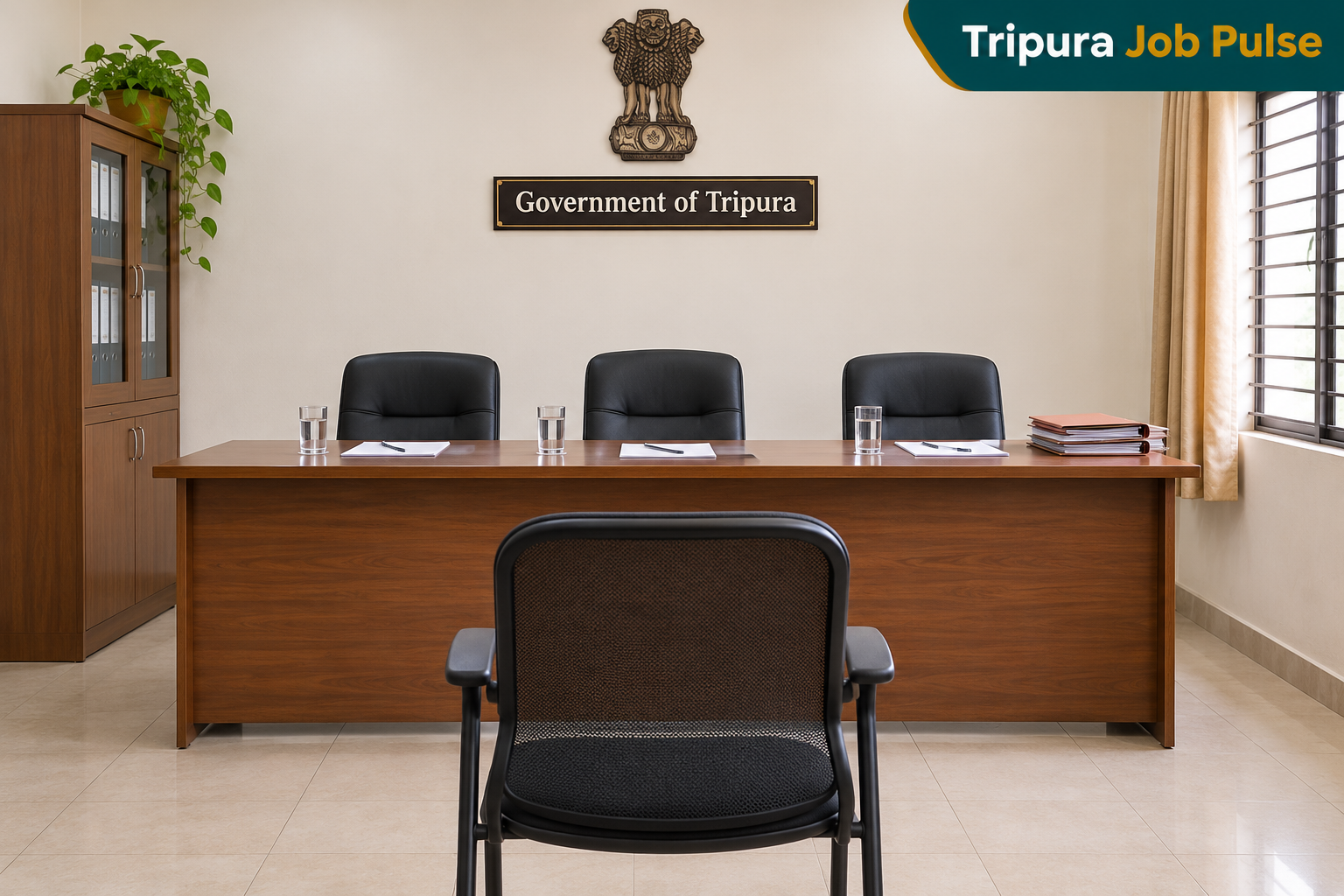
The Joint Recruitment Board has notified 414 Group-C posts, and the Interview and Personality Test begins on 15 December 2026.
For a great many candidates this will be the first selection interview of their life. And the preparation most people do for it — rereading the syllabus — is close to useless, because that is not what is being assessed.
What the posts are Post Vacancies Junior Multi Tasking Operator (Uncommon) 198 Junior Operator (Pump) 185 Lower Division Clerk 31
The reservation split across all three is 187 unreserved, 69 SC and 158 ST, with further sub-quotas for ex-servicemen and candidates with benchmark disabilities.
Two things worth noticing. The Lower Division Clerk posts are the smallest group by far and almost always the most competitive — they are the ones everyone wants. And the two operator roles together account for 383 of the 414, which is where the real arithmetic of your chances sits.
Call letters and instructions are published at jrbtripura.com and employment.tripura.gov.in. Check both, and check them yourself rather than relying on a forward.
What a personality test is not
It is not a general knowledge quiz. It is not a viva on your syllabus. Nobody is going to ask you to recite the districts of Tripura.
A personality test for a Group-C post is a short, structured conversation with a panel whose job is to decide whether you are a person who will turn up, follow instructions, behave sensibly with the public, and not create problems. That is genuinely all of it.
The questions that come up again and again are ordinary:
Tell us about yourself Why do you want this post What have you been doing since you finished studying Something about where you live, or your district Something straightforward about the work the post involves
They are ordinary, and that is exactly why people fumble them. A candidate who has learned the Constitution by heart still goes silent on "why do you want this job", because they have never once said the answer out loud.
How to prepare, in the three weeks you have
Say your answers aloud. Not in your head — aloud, to a wall if necessary. There is a gap between knowing what you think and being able to say it in a sentence, and that gap closes only with practice. Five questions, ten times each, is more valuable than another week of notes.
Have one clear reason for wanting the post. Not "because it is a government job". Something true and specific: the work suits you, it is near your family, it is stable, you have done something similar. Honest and plain beats impressive and invented, and a panel that interviews two hundred people can tell the difference instantly.
Know what the post actually does. A Junior Operator (Pump) and a Lower Division Clerk do very different work. If you cannot describe the job you are applying for, that shows.
Be able to account for your time. If there is a gap between your last examination and now, have a plain answer. Preparing for examinations is a perfectly good answer. Working somewhere unrelated is a perfectly good answer. Evasiveness is not.
Dress plainly and arrive early. Neither wins you marks. Both prevent you losing them.
For the Lower Division Clerk candidates specifically
Clerical recruitment in Tripura has historically involved a typing stage, and typing speed is the one part of this that cannot be improved in the last week. If it applies to you, it is the thing to start on today rather than in December.
Our typing test measures words per minute and accuracy the way the examination does, and it is free with unlimited attempts. If you are under the qualifying speed right now, fifteen minutes a day for three weeks will move you further than anything else on this list.
Whether a typing stage forms part of this particular recruitment is for the official notification to say, not me — check it. But if you are aiming at clerical posts at all, the skill is worth having regardless.
The documents, which is where people actually get hurt
Document verification is where a recruitment stops being about ability and starts being about paperwork. Have everything in order:
Every certificate and mark sheet from Madhyamik upwards Caste, disability or ex-serviceman certificate, if you are claiming against that quota Residence proof Your call letter and photo identification
Check that your name is spelled identically across all of them. Where it is not, sort it out now. A mismatched middle name discovered in the verification hall is a genuinely common way to lose a post you had already won.
While you wait
Three weeks is long enough to do something useful with, and long enough to spend entirely on anxiety.
If you are applying for other posts as well — and you should be — our CV score checker compares your CV against a live vacancy and shows which of its terms are missing from yours. The career roadmap will lay out what else your qualifications already make you eligible for, which is usually more than people assume.
And we list every Tripura vacancy as it opens, so a result that does not go your way in December is not the end of anything.
The panel is not trying to catch you out. They have a long day and a long list, and they are looking for someone sensible. Be able to say plainly who you are and why you are there, and you will do better than most of the room.
Vacancy figures and the interview start date are from the JRBT notification of 28 October 2026 as summarised by third-party listings. Check jrbtripura.com and employment.tripura.gov.in for the official notice, your call letter and the selection stages that apply to your post. This is general advice, not a statement of the board's procedure.